
Skip to content
Process

Investment Casting vs Machining for Complex Parts

Both methods have a place in industrial manufacturing. This practical guide explains how geometry, material, tolerances, volume, and finishing needs influence the choice between investment casting and machining.

By Ashoka Precision Castings
· 4 min read
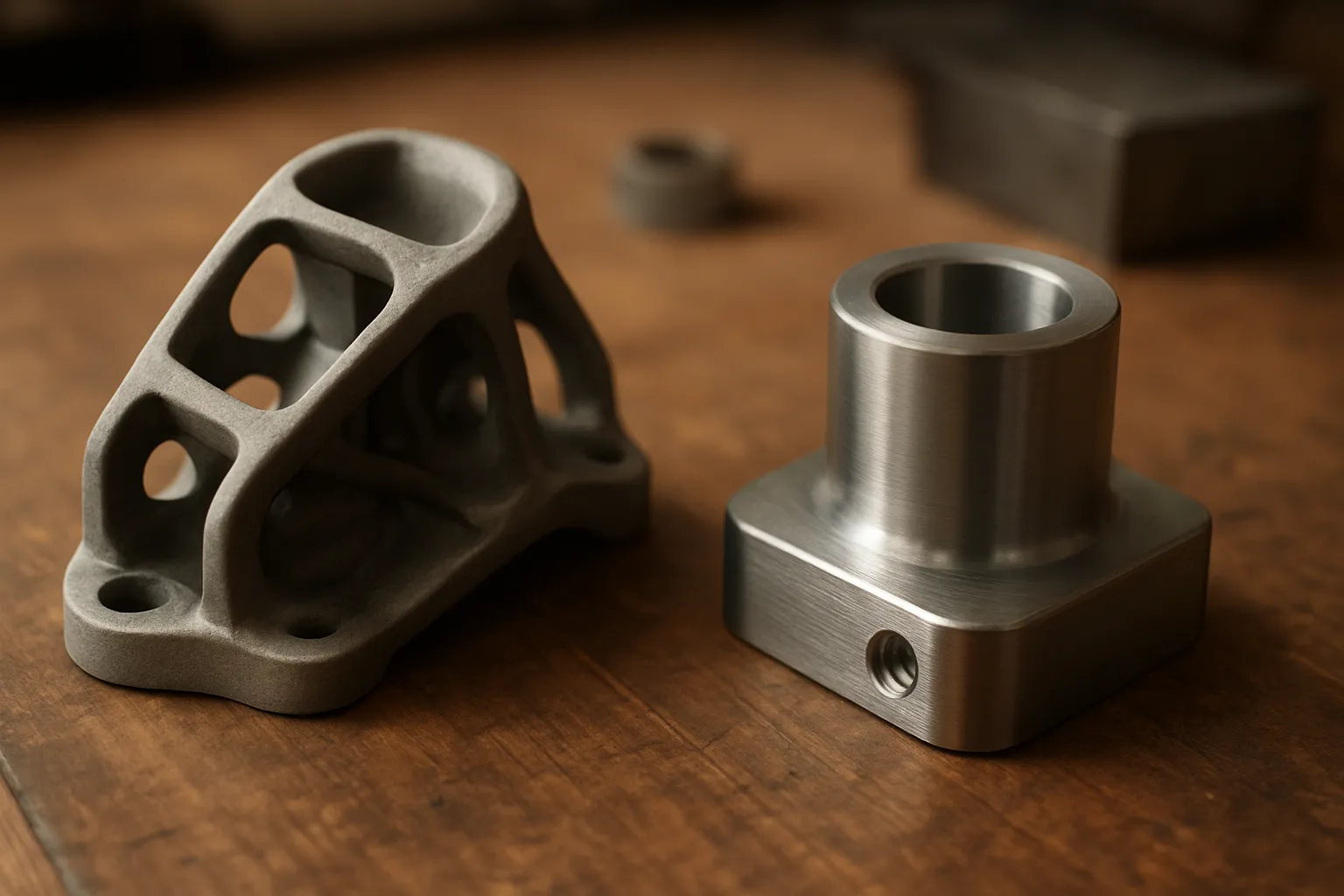
Photo illustrating: Investment Casting vs Machining for Complex Parts

Choosing between investment casting and machining can affect tooling, material use, lead time, and the amount of finishing a complex part needs. This guide is for engineers, procurement teams, and product designers comparing manufacturing routes for pumps, valves, automotive components, and other precision parts.

You will learn where each process fits, which design and production factors matter most, and what information to share during a supplier review so the final route matches the part’s technical requirements.


Key takeaways

  • Investment casting can be efficient for complex, repeatable shapes that would require substantial machining from solid stock.
  • Machining is often practical for simple parts, prototypes, low quantities, or designs that are still changing.
  • A cast-and-machined route can combine near-net-shape production with accurate critical features.
  • Geometry, material, tolerances, volume, inspection, and delivery requirements should be reviewed together.
  • A complete drawing and clear production information lead to a more useful manufacturing recommendation.

How the two processes work

Investment casting creates a wax pattern, builds a ceramic shell around it, removes the wax, and pours molten metal into the prepared mold. The resulting casting is close to the intended shape and can include detailed geometry before selected surfaces are finished by machining.

Machining starts with bar, billet, plate, or another stock form and removes material using cutting tools. It can produce highly accurate features and finishes, but the amount of stock removed depends on the part’s shape and the required tolerances.

When investment casting is a strong fit

Investment casting is often worth evaluating for complex shapes, thin sections, curved passages, integrated features, and parts that would require several machining operations. Near-net-shape production can reduce the amount of material removed during finishing.

It is also useful when the same geometry will be produced repeatedly and dedicated tooling can support a consistent process. Pump and valve components, automotive parts, and other detailed steel or aluminium components may benefit from this approach, subject to design and material review.

  • Complex contours or internal features are difficult to produce efficiently from solid stock.
  • The design would require multiple setups or joining operations if machined.
  • A repeat production requirement can justify casting tooling.
  • Critical faces, holes, or sealing areas can be left for controlled finishing.

When machining is the better route

Machining can be the practical choice for simple geometries, very small quantities, prototypes, or parts that need changes during development. It avoids casting-pattern development and can provide direct control over many dimensions from the starting stock.

It may also be appropriate when the required material is readily available as machinable stock or when the design contains features that are difficult to cast. However, complex shapes can require more setups, longer cycle time, and more material removal.

  • The part is simple enough to machine directly and efficiently.
  • Only a small number of parts is needed before the design is finalized.
  • Frequent design changes make dedicated casting tooling less suitable.
  • The material and stock form are readily available for the required part.

Compare the decision factors

There is no universal winner. The right route depends on the part’s geometry, material, tolerance scheme, surface requirements, quantity, inspection plan, and delivery needs. A drawing review should consider the complete process rather than comparing only the initial operation.

For many complex components, the best solution is a combination: investment casting for the main shape followed by CNC machining on critical interfaces. This can preserve the design freedom of casting while providing accurate assembly surfaces.

  • Geometry: review wall thickness, radii, cores, undercuts, and access for tools.
  • Material: confirm the required steel or aluminium grade and its process suitability.
  • Tolerances: separate as-cast dimensions from features requiring machining.
  • Volume: compare tooling effort with the expected prototype, batch, and ongoing demand.
  • Inspection: identify critical dimensions, surface finishes, tests, and documentation.
  • Supply plan: align on samples, approvals, batch consistency, and dispatch requirements.

Prepare for a useful supplier review

Send the latest drawing revision with material grade, tolerances, surface finish, machining requirements, and any special inspection or testing needs. Mark sealing surfaces, datum features, and other critical areas clearly.

Include the expected quantity, batch size, annual demand if known, and whether the job is a prototype, pilot batch, replacement part, or ongoing production. A sample part, 3D model, or assembly reference can provide useful context when the geometry is difficult to interpret from a drawing alone.

The supplier can then compare casting, machining, or a combined route and explain where tooling, process controls, and finishing operations fit into the plan.

Frequently asked questions

Is investment casting always cheaper than machining?

No. The better choice depends on geometry, quantity, material, tooling, machining content, inspection needs, and the overall production plan. A supplier should review the specific part before recommending a route.

Can investment-cast parts still be CNC machined?

Yes. Critical holes, sealing faces, datum surfaces, and other features can be machined after casting when the drawing requires tighter control or a particular finish.

Which process is better for prototypes?

Machining can be convenient when quantities are small or the design is changing. Investment casting may become more attractive once the geometry is stable and repeat production justifies the tooling and process setup.

What information should I send for a comparison?

Share the latest drawing revision, 3D model if available, material grade, tolerances, surface finish, critical features, quantity, batch expectations, inspection requirements, and target delivery plan.

Review Your Part With Us

Send your drawing to Ashoka Precision Castings for a practical review of investment casting, machining, or a combined manufacturing route.

Ashoka Precision Castings
ISO 9001 investment casting for pumps, valves, and automotive OEMs, with drawings quoted in 48 hours from Coimbatore.
Our services →
Share this article WhatsApp LinkedIn
← All posts